

Global mangrove crab monitoring: progress updates
- Posted by Akshata Mehta
- On May 22, 2026
By Diego Gloria
Global mangrove crab monitoring is underway, with partners around the world carrying out regular field surveys using GLOW’s standardised crab monitoring assay.
Our assay balances local knowledge and context with consistent monitoring methods. This has been made possible through regular discussions with partners and improvements to workflows, leading to robust data that highlights subtle observations from mangroves around the world.

As monitoring expands, GLOW teams are collecting increasingly detailed data on crab activity and behaviour. Camera settings have been adjusted to capture images more frequently, allowing researchers to observe behaviours such as crabs carrying leaves into their burrows — an important process linked to nutrient cycling in mangrove ecosystems.

The team has refined field procedures through practice. Checklists, datasheets, consistent file naming, and clear folder structures help to ensure that information is captured and that the growing volume of data is well-organised for analysis.
Over the past few months, teams have collected a large number of images from mangrove sites around the world. These include a wide range of crab species from places such as Costa Rica and the Philippines, with field photos supporting species identification and comparison across regions.

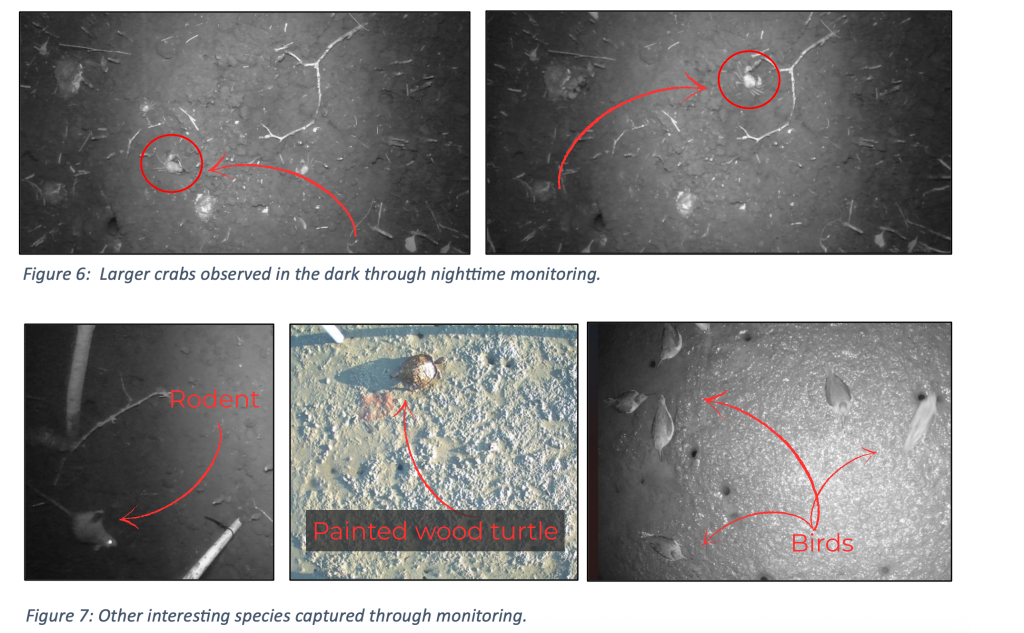
Nighttime monitoring has revealed a less visible side of mangrove ecology, including larger crabs active after dark. Cameras have also captured other mangrove visitors, including rodents, birds, and even a turtle, highlighting broader mangrove biodiversity.
Through shared methods, regular communication, and ongoing protocol improvements, GLOW partners are building a robust global dataset. We are now training automated models that can turn field observations into meaningful insights into crab activity, mangrove biodiversity, and ecosystem health.
0 Comments