

Small cameras, big clues: what mangrove wildlife is telling us across the GLOW network
- Posted by Akshata Mehta
- On May 29, 2026
The Global Wetlands Project (GLOW) brings together partners across countries to monitor mangrove ecosystems using shared field methods, camera systems, sensors, and automated data tools. As mangrove degradation continues to affect coastlines worldwide, restoration efforts often focus on forest structure and canopy, while far less attention is given to animals —crabs, fish, mudskippers, molluscs, and other animals that can indicate how ecosystems are functioning. By combining local field knowledge with emerging technology, GLOW is helping to fill this monitoring gap and build a clearer picture of mangrove health, biodiversity, and restoration progress across different regions.

From to Hong Kong, South Africa, Philippines, and Australia, GLOW partners have been capturing fascinating glimpses of life in the mangroves. Across these sites, camera traps and acoustic recorders are documenting crabs, mudskippers, whelks, fish, stingrays, and other animals that help tell the story of how mangrove ecosystems are functioning.
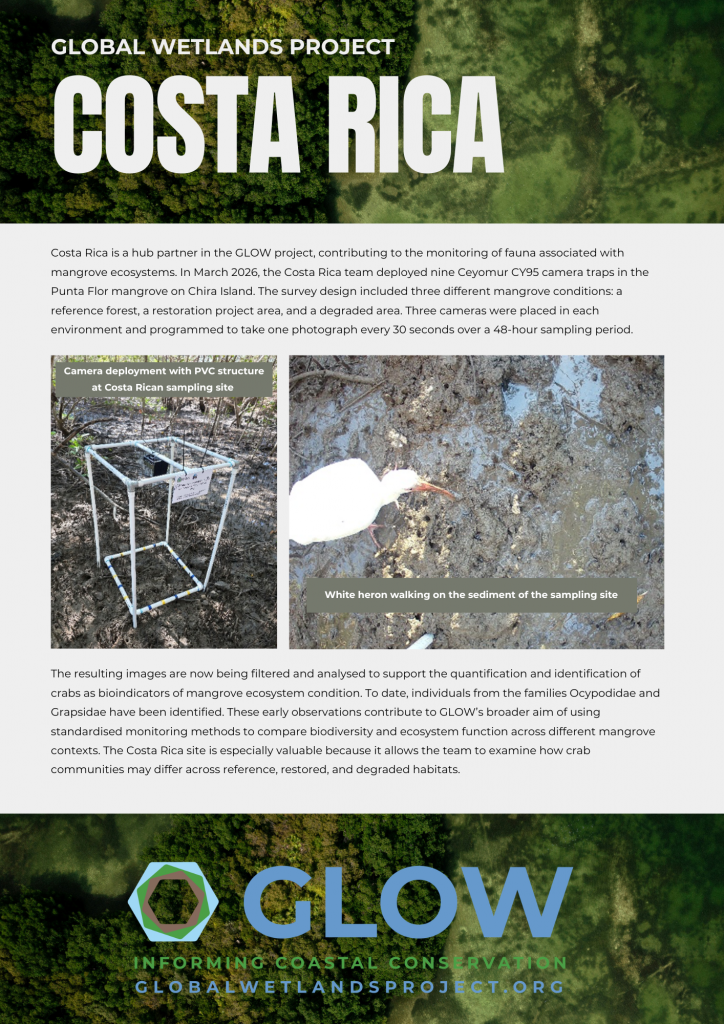
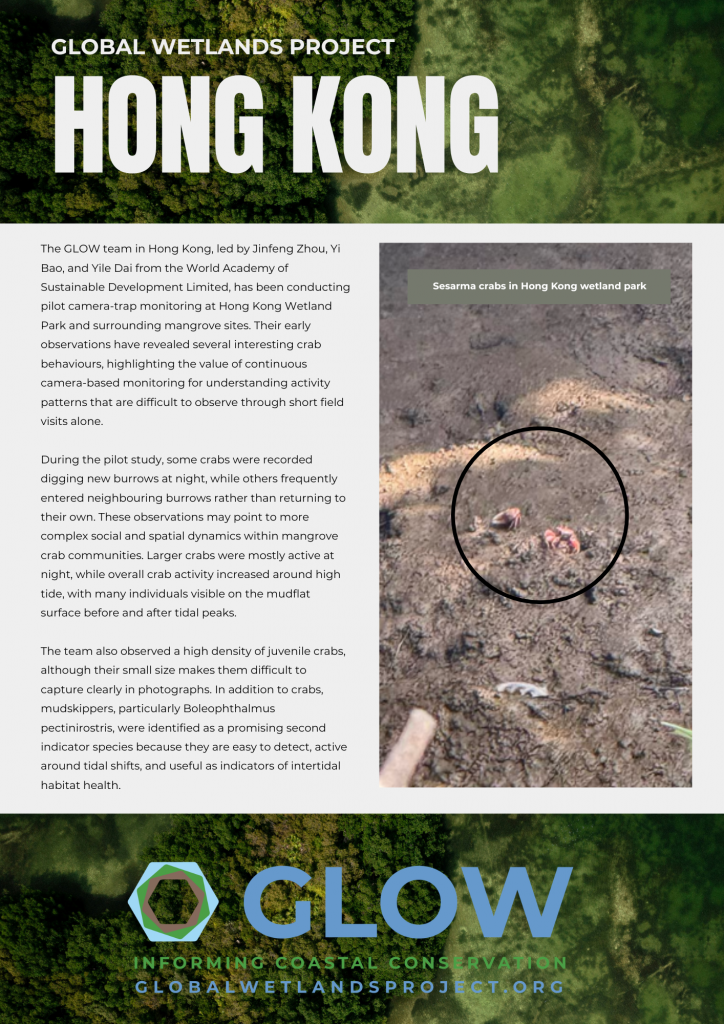
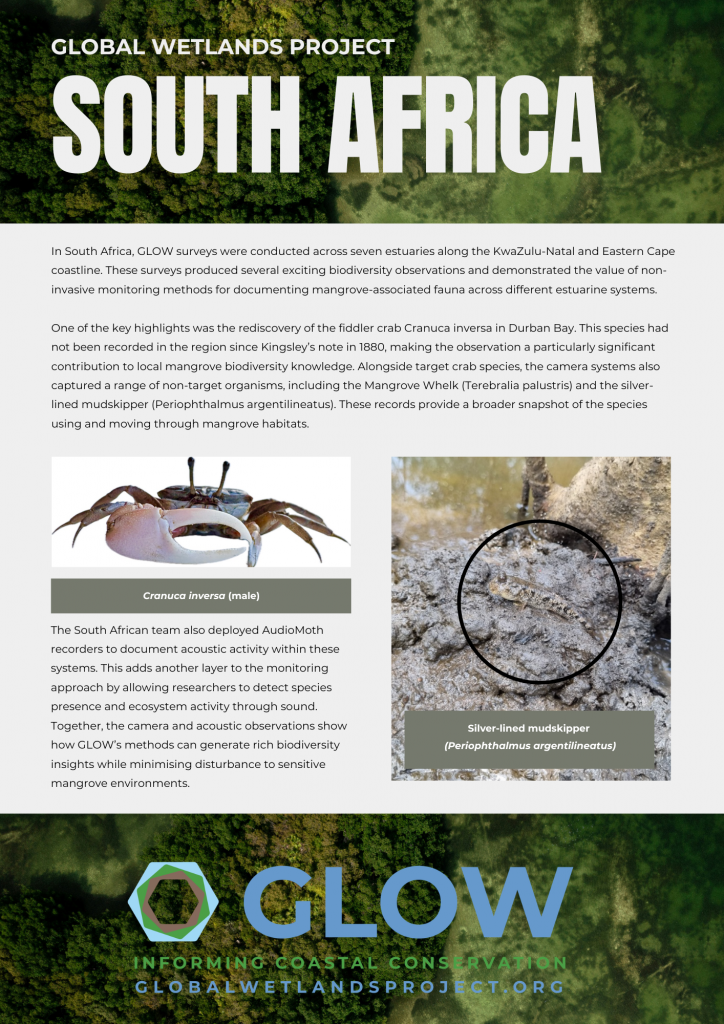
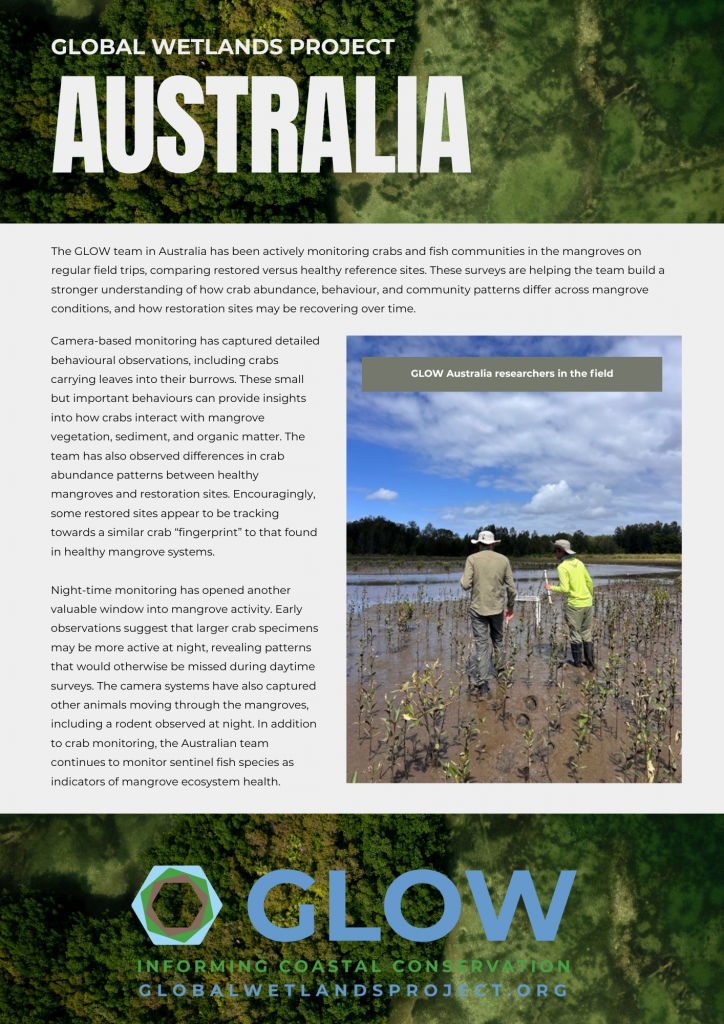
In Costa Rica, camera traps on Chira Island are being used to compare reference, restoration and degraded mangrove areas, with crabs from the families Ocypodidae and Grapsidae identified as bioindicators. In Hong Kong, pilot camera-trap work at Hong Kong Wetland Park has revealed complex crab behaviour, including night-time burrow digging, tidal activity peaks and mudskippers as a promising wildlife indicator. In South Africa, surveys across seven estuaries produced an exciting rediscovery: the fiddler crab Cranuca inversa at Durban Bay, a species last recorded in the region 150 years ago. In Australia, a year of monitoring before and after restoration has shown how restored mangroves are beginning to develop crab community patterns that resemble healthy reference sites.
Together, these observations show why GLOW’s approach matters. Automated biodiversity monitoring can generate regular, comparable and locally meaningful information, as well as capturing unexpected moments that make field ecology so valuable.
“Crabs are among the many indicators of mangrove ecosystem health. As practitioners in mangrove restoration and conservation in Madagascar, we find the GLOW app, and particularly crab data, useful for assessing the impact of our initiatives.”
– Lalao Aigrette, Chief Blue Economy Officer, Bôndy International, Madagascar.
These early insights also offer a glimpse of what the next generation of GLOW tools can make possible. The developing GLOW app will help bring together biodiversity highlights, wildlife trends and wetland health information in a more accessible way for partners, managers and conservation practitioners. Learn more about GLOW’s work and upcoming tools on the GLOW What We Do page.
The field observations by country can be found here.
0 Comments